
I’ve just updated my post on VHF contesting. Since it was first published in February 2024, it has garnered around 6,000 views. I’ve made a few tweaks over the years, but now it feels like the right time for some significant updates.
QST Magazine Articles on VHF Contesting
I’ve been conducting new research and writing a couple of articles for QST Magazine’s World Above 50 MHz column. My articles, “VHF Contest Categories” and “VHF Contest Trends,” appeared in the August and December 2026 issues, respectively.
Hopefully, these articles have offered useful insight—or at least a fresh perspective—on improvements and operating changes that could benefit a VHF contest station. Better still, they may inspire a newcomer to give VHF contesting a try.
ARRL VHF Contest Full Results Articles
I’ve also written the full-results articles for the ARRL’s January, June, and September VHF Contests. You can learn a lot from these articles and by reviewing the line scores.
The articles reveal the top ten finishers in each category and explain how they achieved their winning scores. I’ve been thinking about updating my home contest station, and reviewing their bands and QSOs can offer useful insight into what you should be running to maximize your score.
Selecting VHF Contest Bands
As a rover, I entered the Limited Rover category mainly to benefit from its lower operating power requirements. Over time, I added 222 MHz so I could cover all four bands in the category. From this experience, I learned that there are very few stations on 222 in North Texas and the surrounding grids, and only a few more on 432.
When I shut down my rover operations and focused on my home station instead, I felt there was little reason to operate on 222 or even 432. Yet, in my recent entries as a Single Operator Portable—winning the category in every ARRL contest from September 2024 through June 2026, except January 2026—I found that 432 can add quite a few points and multipliers.
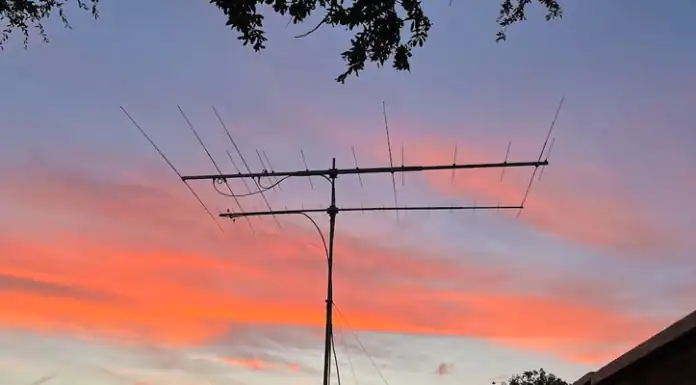
Now that I’m focusing more on operating from home, I’ve definitely gotten into 432, adding a 250-watt amplifier and an 18-element Yagi. 222 is interesting, but not because it would significantly boost my score.
Here’s what I found after reviewing contest scores.
June 2025 VHF Contest:
- 222 MHz total QSOs = 3,516
- 432 MHz total QSOs = 5,737
September 2025 VHF Contest:
- 222 MHz total QSOs = 3,285
- 432 MHz total QSOs = 5,371
That figure includes all contest entrants. The number of QSOs across both bands is much, much lower here in North Texas.
Even so, I still occasionally consider adding 222 MHz to my home station. But the potential reward doesn’t justify the iEven so, I occasionally consider adding 222 MHz to my home station. But the potential reward doesn’t justify the investment, largely because rigs and amplifiers aren’t readily available. Transverters are an option; that’s how I operated as a rover, but they don’t make sense for my home station or location.
This is one example of sifting through the numbers to help me make equipment and operating changes. Your mileage will vary, but it’s worth running the numbers.
Get on the Air for VHF Contests
As always, you can crunch the numbers, develop a strategy, and build your station—but none of it matters if you’re not on the air. So get on the air in whatever category works for you and your station. You can even try one of the FM-only categories.
I offer that encouragement mainly so I’ll have more stations to work!
Good luck and have fun.