

As I’ve done with the Guide to 6 Meter DXing – Getting Started on the Magic Band, I felt it might be a good idea to pull together a number of resources for those in pursuit of the Fred Fish Memorial Award or FFMA.
What is the FFMA?
The ARRL established the Fred Fish Memorial Award in 2008 to honor Fred Fish, W5FF, who worked and confirmed all 488 grid squares in the 48 contiguous United States on 6 meters. For more, see the QST announcement and the ARRL’s online FFMA information. Here’s an important quote from that announcement:
The FFMA is an “all-or-nothing” award. You must submit confirmation of 2-way contact with all 488 grid squares on 50 MHz in order to qualify. There are no endorsements and no recognized tiers of progression. Any mode may be used. The rules for the award will strictly follow the rules of the ARRL VUCC program.
It’s essentially an extension of the ARRL VUCC award program, but one that is exceedingly tough to earn. How tough is it, you might ask? Ten years after the award was introduced, in 2018, only seven had earned FFMA. The class of 2019 saw two earn the award. The class of 2020 added four to the list. In 2021, there was a bumper crop of 15. As of August 2025, there’s a grand total of 61. I’m looking forward to seeing the numbers for 2026.
It’s Tough, But We’re 6 Meter Grid Chasers
OK. So it might be tough, but that shouldn’t deter general all-around grid chasers, particularly those like me who are addicted to chasing grids. It forms one more goal along the way to adding stickers to your VUCC certificate. Although it is a very, very challenging goal.
The good news is that there are several hundred other hams chasing the award, and they are all highly motivated. That means they urge or pester, as the case may be, other ham radio operators to get on the air from rare grids. Or, in grids where nearly no one has gone before, they encourage rovers to make it happen for the needy.
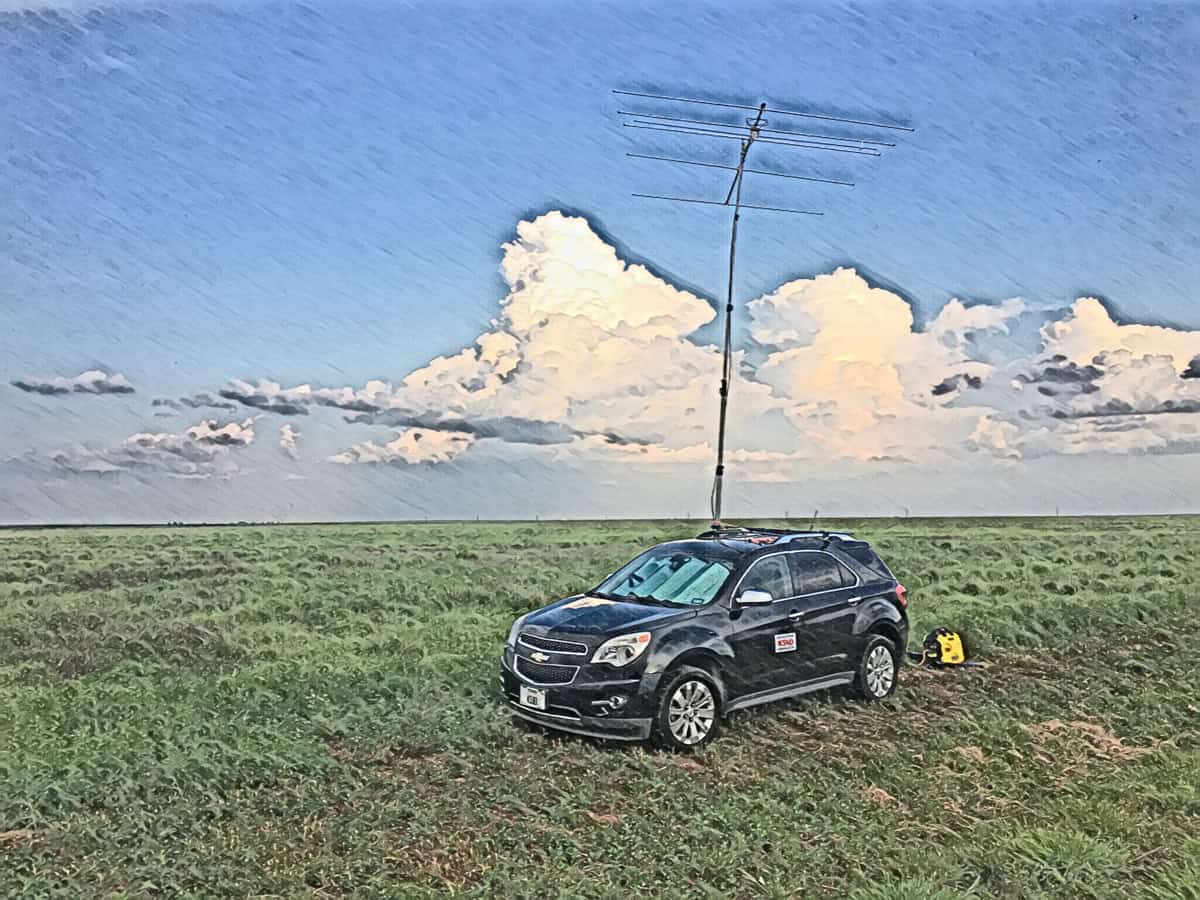
That’s where a great deal of excitement can come into play. There are several legendary rovers that operate in extremely remote locations, using four-wheel drive or boats and lightweight equipment, or they travel thousands of miles, activating multiple rare grids along the way. They usually bring big antennas and large amounts of power. You often see photos and even videos of the places and the incredible rover operations.
Sign Me Up
So how do you get started? First, work all the six-meter grids you can. All grids in the U.S.A. count, so start with the ones you hear.
Second, start monitoring DX Maps and other online resources to catch Sporadic E openings as they occur. If you’re alert and available, you can really add to your list of grids when the band opens.
Another very useful online resource is Gridzilla.us. After you sign up and upload your current logbook, it highlights needed grids as they come on the air. It’s also a great place to track rover operations. I’ll note that in my own FFMA journey, 23 rovers provided 90 grids to my logbook!
Third, become familiar with making meteor scatter contacts using WSJT-X MSK144. This mode can be relied upon year-round, especially during seasonal meteor showers. It can be very important when trying to work rovers who are within 1,000 to 1,200 miles.
Another mode gaining popularity is WSJT-X Q65. It’s achieving excellent results when no other modes are working at all. So get up to speed so that you’re ready when that mode is needed.
Finally, start a ham shack continuous improvement program. You can do great things on six meters with a vertical or dipole, but probably not achieve FFMA with that setup. So look at your antenna first. How can it be improved? Then look at your receiver. For example, many people use a separate SDR receiver and software to optimize their station. And, finally, consider more power, which should be the last thing to consider on a long list of possible improvements.
Oh yeah, you can also read my book Magic Band Revealed. It’s free and a pretty quick read.
FFMA Resources
Here’s an opening listing of FFMA resources, all of which also apply to chasing six meter VUCC grids.
General Information
- DX Maps — This is my personal favorite. You can see the openings and get a sense of where to point your antenna.
- FFMA@Groups.io — This is a mailing list that highlights upcoming grid activations and general chatter on six meters. It also has archives on FFMA history and more. There’s a Wiki for further information.
- FrontRange6meter@groups.io — This group does a good job of keeping up with techniques and what’s happening in general for six meters. They also provide online Zoom technical and how-to presentations with top-level speakers.
- VHF Slack — This is a channel on Slack dedicated to VHF. It covers rover activations, often in real time, including “you’re in the log” type of information. It’s extremely valuable. You’ll probably need to request an invitation.
- PingJockey — This online chat system can be helpful in coordinating meteor scatter contacts.
Helpful Software
- GridTracker — This bit of software can help you not only keep up with your own grids but also monitor DX spotting systems to find grids that are currently on the air.
- JTAlert — This software will monitor your decodes from WSJT-X and alert you for any needed grids that it finds.
- VE7CC — This is a DX cluster with spots on all the ham bands. There are others you can monitor. Usually your logging program will help with this type of monitoring for new grids.
- DX Lab Suite Spot Collector and DX Lab Suite — Another helpful bit of software to keep on top of grids that are on the air.
- JTDX — This is an FT4, FT8, JT65, and JT9 decoding and transmitting software. It’s been found to catch more weak signals than WSJT-X. Your mileage may vary. But it’s worth investigating.
- WSJT-X Improved — This software package provides a number of features before they debut in the regular versions of WSJT-X. It’s well worth downloading.
Rover Information
- https://www.coilgun.info/rover-us/home.htm — Documented rover locations by K7BWH that can be helpful in guiding other rovers.
- So you wanna to be a 6 m Rover eh? — This is a well-written article by Dave, KG5CCI, one of those legendary rovers on six meters.
- You can find a bit of information on this website about VHF roving as well. Start with the articles I’ve written for the National Contest Journal.
FFMA Leaderboard moved to Gridzilla
The FFMA Leaderboard has been the go-to resource for tracking progress toward the FFMA and for identifying the most needed grids within the 488. It was also extremely valuable for rovers to decide which grids to visit and who needs them.
Bill, ND0B, started this effort and generally kept it updated once a year. After he earned FFMA #10, he found Francis, KV5W, to run the system. Since Francis earned FFMA #47, Ed, N7PHY, maintained the listing.
The Leaderboard has now moved to Gridzilla.us, where much more functionality has been added, including real-time updates and alerts for active grids. So be sure to sign up for this excellent resource.
Even with the move to Gridzilla, I recommend signing up for the FFMA Groups.io for updates and timely information on six meters and FFMA.
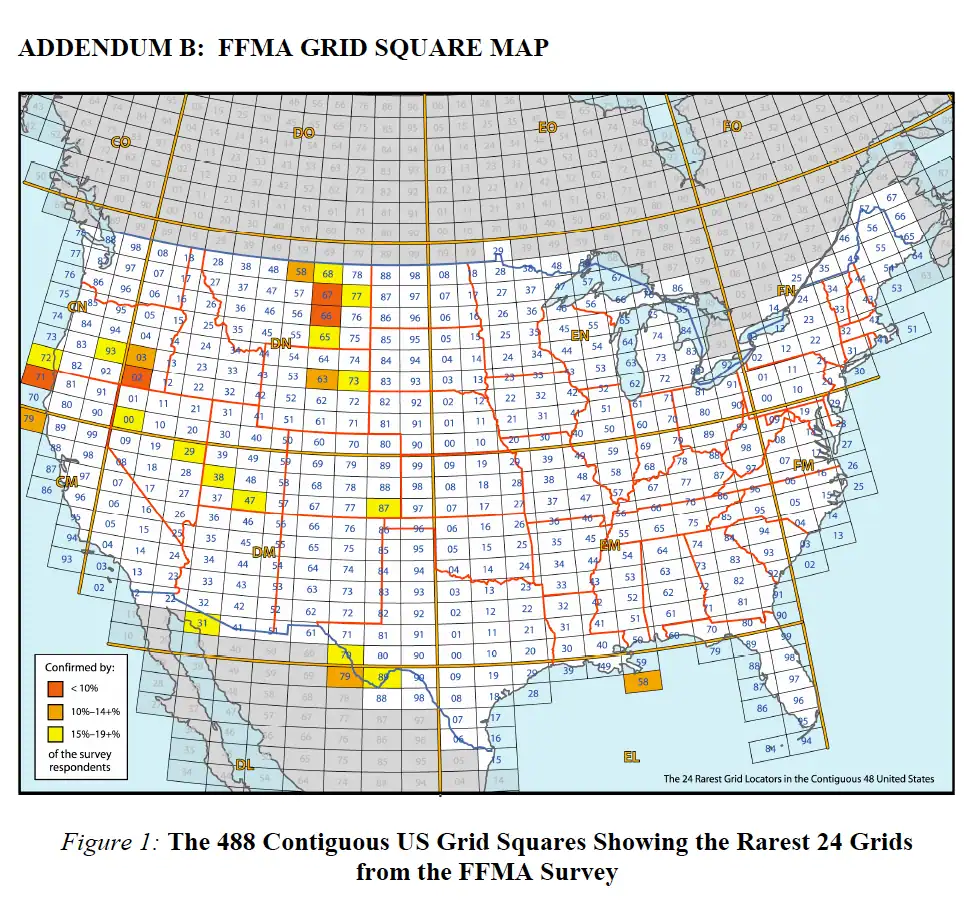
Tracking the most needed grids isn’t a recent thing. Here’s the first effort to track needed grids, based on a survey of six meter operators conducted in November 2007 as part of the proposal for the award.
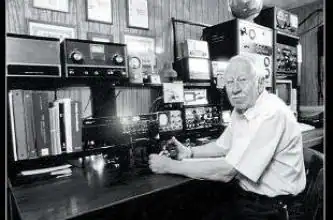
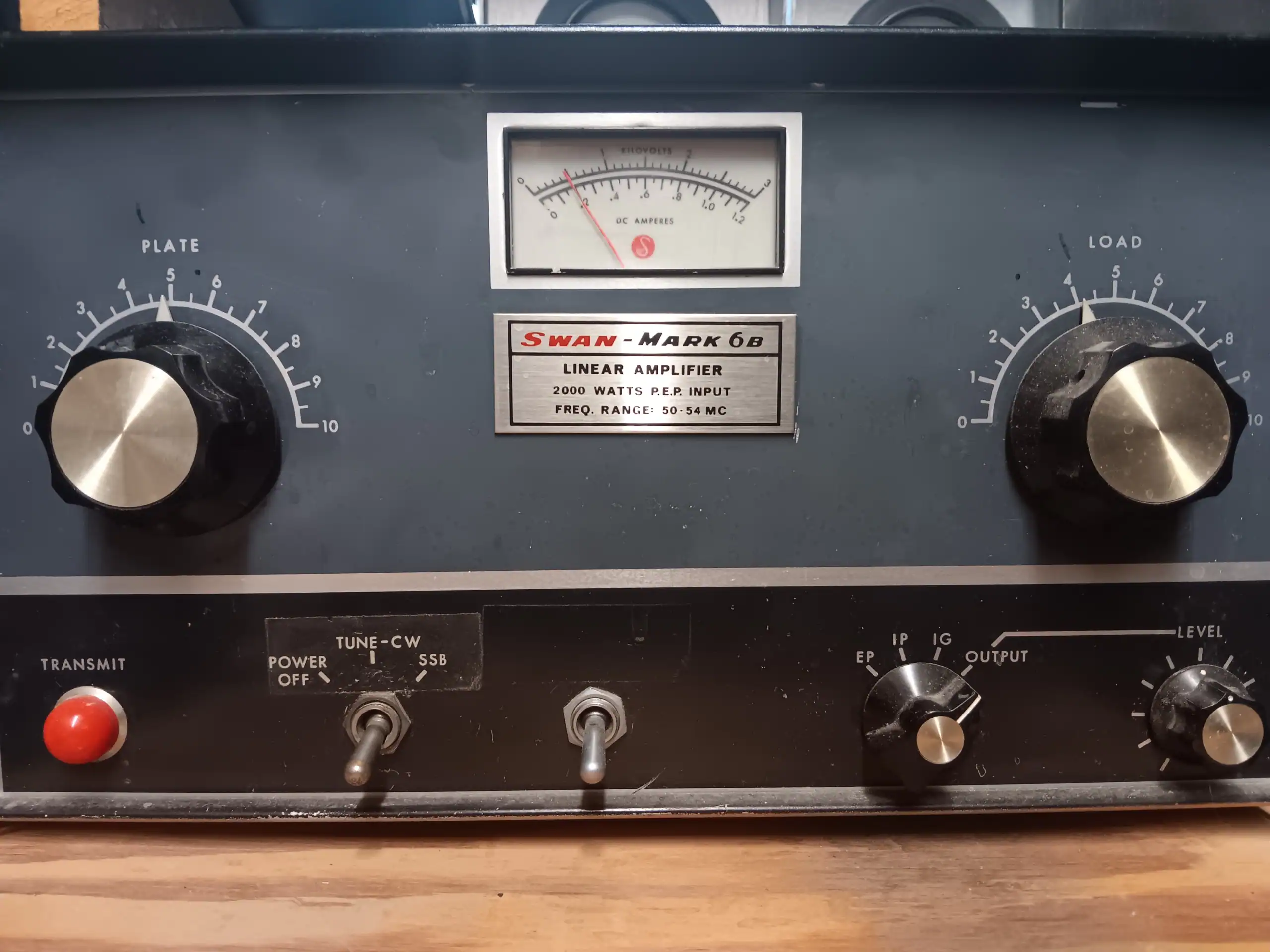
On a historical note, nearby you’ll see Fred Fish, W5FF, in his ham shack. The Swan amplifier near the top left-hand corner is still in operation. Dan, W5AFY, purchased the amplifier from Fred’s estate and used it to earn FFMA #26. A close-up photo is below. What an amazing journey and a wonderful background story.
Online Videos
You can find several video recordings on YouTube: FFMA Getting Started by Francis KV5W, plus, Jay N1AV FFMA under 1500 days
You Can Do This
It is the Magic Band. Several operators have earned the award using low power and simple antennas. And it’s all about the journey rather than the destination.
This is a fun journey. Join us in getting on the air.


[…] outlined above. Six meters continues to be a blast chasing new grids and hoping to advance toward FFMA (442 grids confirmed now). It’s also great fun to pursue some of the rovers out […]
[…] Sunday morning, I was watching for N7PHY in DN67 for a new FFMA grid. He was on 50.303 MHz but nothing was heard. As I was doing some exercises and getting ready […]
[…] to get ready for the next Sporadic E season in an effort to work the last 18 grids I need for the FFMA Award. I would have loved to find a suitable Tokyo Hy-Power amplifier that matched the HL-350Vdx 2 meter […]
[…] Remote Rig ControllerBeverage AntennaNed Sterns, AA7A – Episode 100 QSO Today PodcastFred Fish Memorial AwardCQ Worldwide […]
Congratulations on getting FFMA, exceptional dedication to 6m operating. Mike WB2FKO
Thanks, Mike. This is one of those awards that only arrives after a great deal of work. It also helps if your station is in the center of the USA… Now for the next project! 73, Jim, K5ND