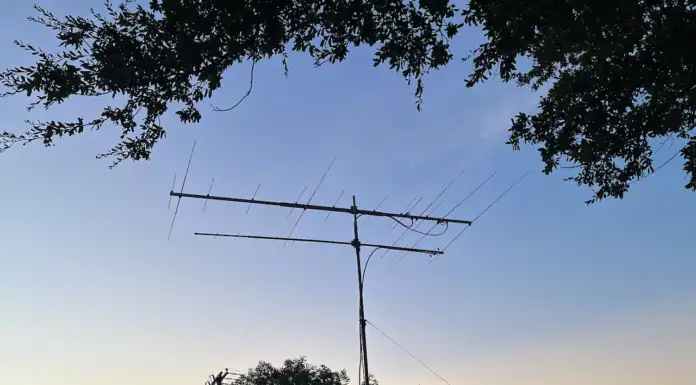

The last time I entered the CQ VHF Hilltopper category was in 2024, which was also the last time the category had a 10-watt maximum. I was a winner then, but not this time. Even so, I posted a good score and had a fantastic time.
VHF Hilltopper Location — Wizard Wells EM03
All of my previous Hilltopper or Single Operator Portable operations have been from my favorite spot in EM01. This time, given the maximum six hours of operation, I wanted to do something different. The drive to one of my favorite rover locations was only 90 minutes, so I elected to motor out to Wizard Wells and EM03. It’s a great spot northwest of the Dallas-Fort Worth area, perched on a ridge with both easy access and very little traffic.
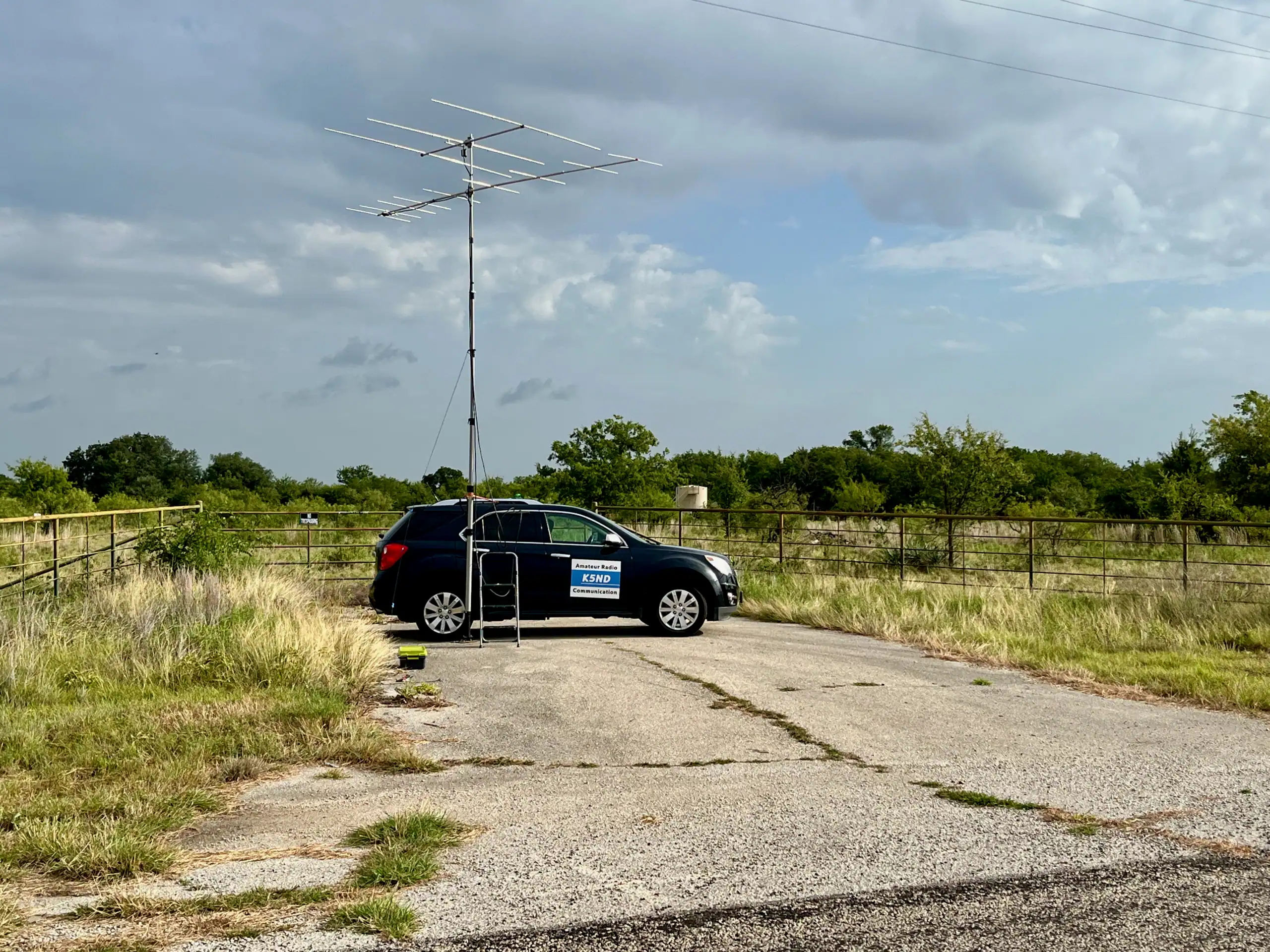
I was last there as a VHF Rover for the June 2021 contest. Not much had changed. However, as I mounted the antennas, cables, and other equipment to the mast and tilted it into place, I looked up and was stunned to see high-voltage power lines directly overhead! The true amateur radio operator would have been immediately concerned about the noise level. For my part, I felt lucky not to have been electrocuted. The distance between the top of my mast and the power lines was roughly 20 feet; even so, it was a reminder to check these things. Once home, I checked previous photos, and this line was installed sometime after my last visit.
VHF Hilltopper Station Setup
My backseat station used essentially the same setup I took on the road for the DM86 grid activation. Monitored by two wattmeters, it brought me up to an easy 100 watts on both bands — using Tokyo Hy-Power HL-166V and HL-200V brick amplifiers driven by an Icom IC-7100. The computer ran WSJT-X Improved, linked directly to N3FJP’s VHF Contest Log. That worked much more simply than the JT-Alert setup I used in DM86.
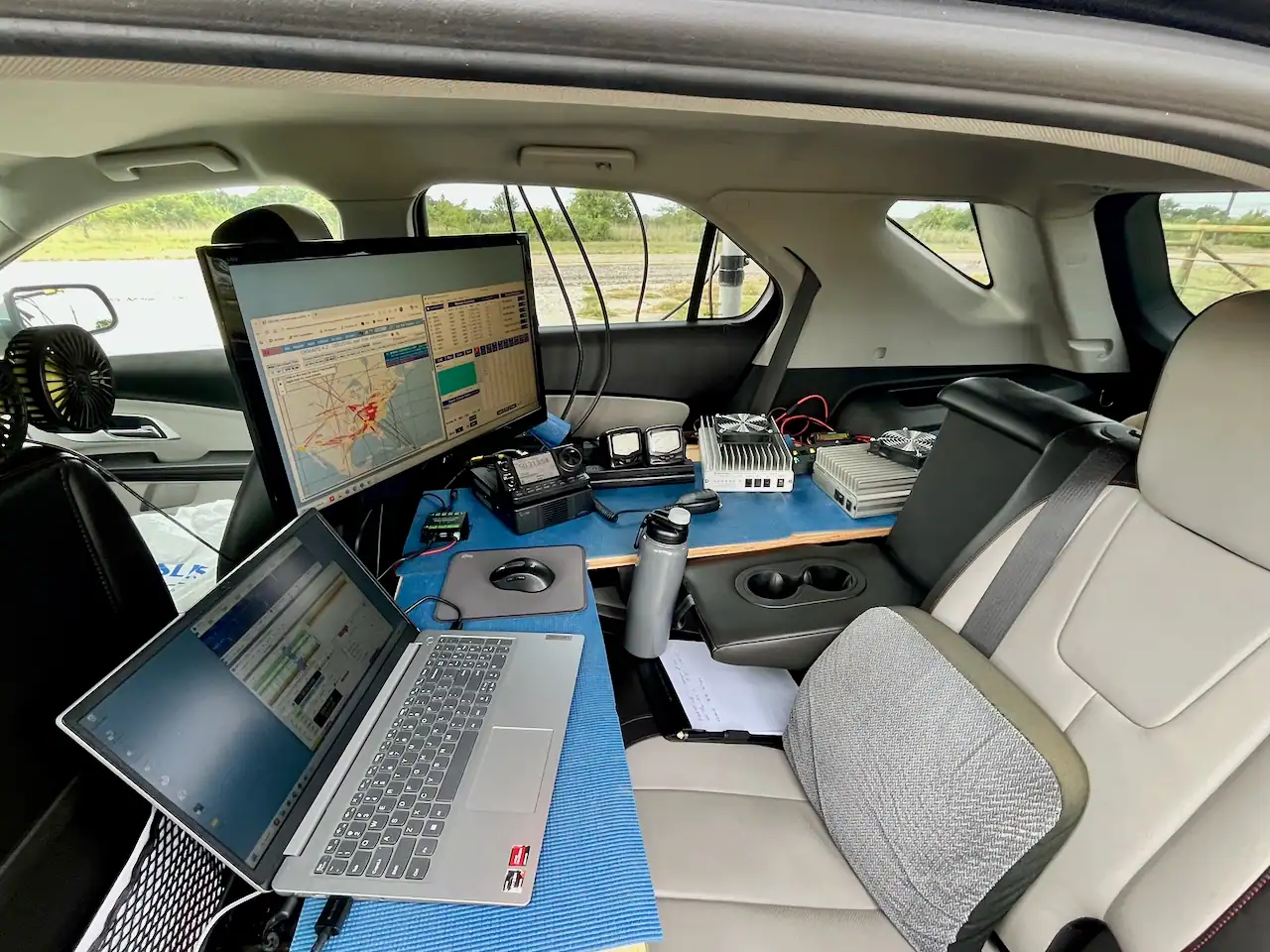
The antennas atop the MaxGain Systems push-up mast were an M2 6MSS three-element Yagi for 6 meters and a 2M-9X nine-element Yagi for 2 meters. Power was supplied by two 100 Ah LiFePO4 lithium batteries, with the laptop and monitor powered by an inverter. HVAC was courtesy of the car, with a nifty USB-powered fan directing it to the backseat.
Saturday 9 AM to 3 PM Operation
Watching the activity levels on six meters over the past few days led me to believe that getting on at the start of the contest would be the best move for my six hours of operation. As it turned out, that worked well, and the conditions appeared to be excellent for the full 24 hours of the contest.
Six meters was the go-to band. I tried to listen on two meters from time to time, but I’m sure I missed a few opportunities. At the start, I checked VHF Chat, but I decided to just run the contest.
Here’s how I did.
- Six meters — 105 QSOs and 82 grids.
- Two meters— 8 QSOs and 7 grids.
- Score 10,591.
Looking at the 3830 Scores, I see that KA5D posted a score of 16,463. So perhaps I’ll manage to finish as runner-up. Last year’s Hilltopper winner, K2LNS, posted a score of 4,508. Of course, last year I set the Single Op All Band QRP record at 9,159. But it all depends on propagation and your location.
Of course, it also depends on whether you get on the air and participate in the contest. Push the six-meter button on your rig and try the next VHF contest in September. Good luck and have fun.