
Ever wondered what makes great portable and rover antennas? Here’s my insight from years of rover and portable operations, from winning contest entries to times when I’ve brushed low-hanging tree branches along the way.
Always Room for More Antennas
I love antennas, and apparently, my readers do too, based on the traffic patterns on this website. From six-meter dipoles, with 31,000 views, to six-meter antennas—I’ve tried a few at 56,000 views. It’s clear that antennas generate a lot of interest. I can only hope that some of that information has led to improvements in purchases and operations, at least on six meters.
Portable and Rover Antenna Criteria
The main criteria are size, weight, and performance. The balance among these key factors usually varies significantly between a home station and a field setup. For a rover, this also involves multiple setups and takedowns during a contest. Therefore, in addition to size and weight, ease of setup and portability are important. This is less of an issue for portable operations that only require a single setup. Nonetheless, you’ll find that these criteria are very similar.
Portable and Rover Antenna Performance Criteria
The main specifications here are directivity, forward gain, and front-to-back ratio. Directivity mainly relates to beamwidth, which also affects forward gain. The narrower the beamwidth, the higher the forward gain. However, if your rover or portable setup uses a hand-cranked, push-up mast, having a narrow beamwidth may not be very useful. You will need to precisely aim the antenna at the station you’re interested in, and you might miss stations just outside the beamwidth.
The front-to-back ratio can help reduce interference behind the antenna, but honestly, you might want to pick up those stations during a contest. So, I’m not sure this performance measure is that important for a rover or portable setup.
Omni-Directional Antennas

Omni-directional antennas generally provide equal coverage in all directions. They are also compact and easy to install. However, be cautious about claims regarding coverage and gain. I prefer the Par Electronics Omniangle antennas, and I have a few installed in my home attic. Read their omniangle antennas FAQ for insights on how to best compare these antennas.
Directional Antennas for Rover and Portable Operation
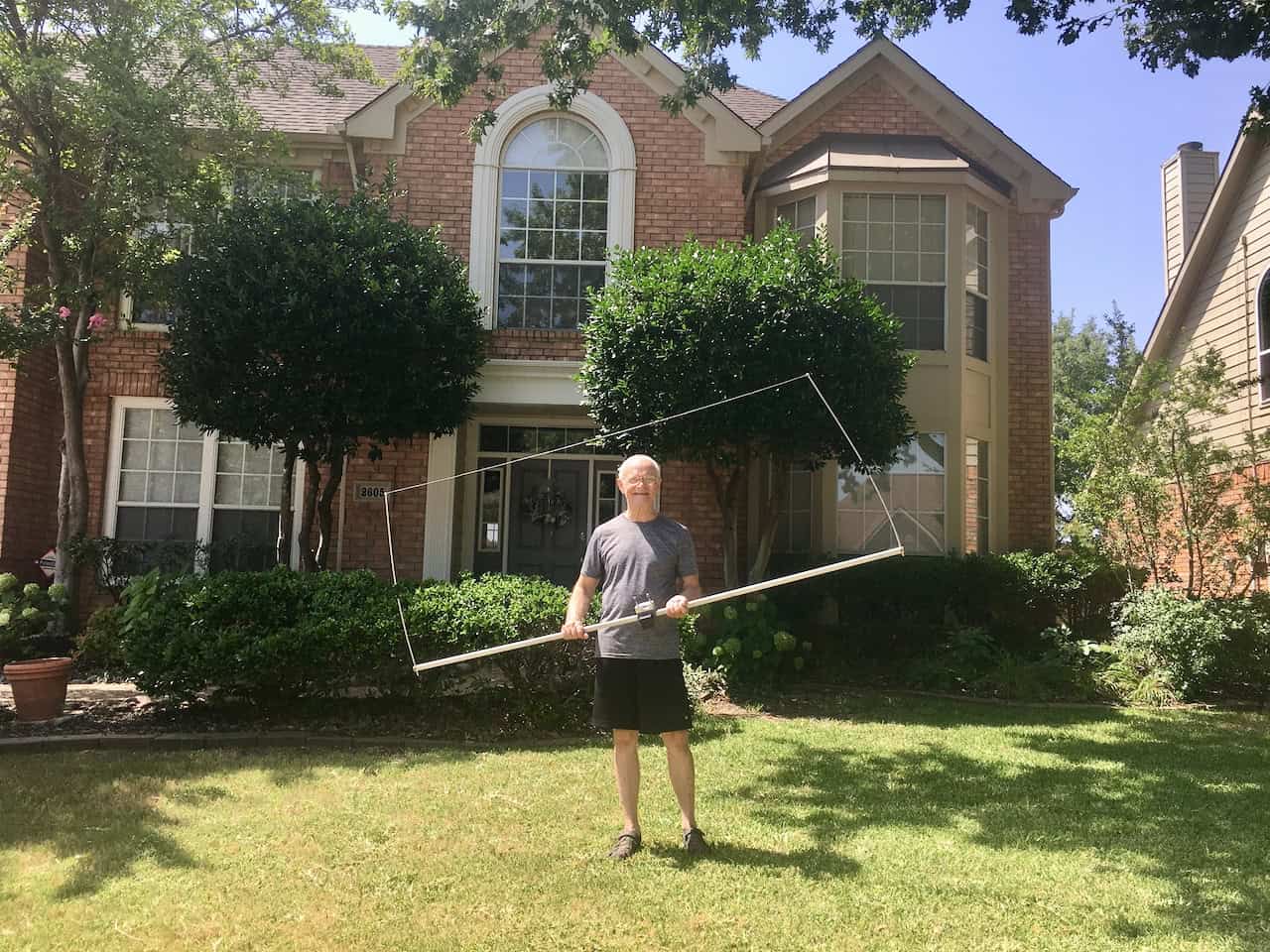
My all-time favorite directional six-meter antenna for rover and portable operation is the Par Electronics Stressed Moxon. Read my review at Stressed Moxon — Ingeniously Elegant. The antenna is very compact, weighs 3 pounds, offers 5.8 dBi of gain, and has a 78-degree beamwidth. Front-to-back is 17 dB. It’s also very easy to set up and take down. BTW – It also handles tree disruptions just fine. I’ve hit a few low-hanging branches and bent the antenna back into shape for the next grid!
My next favorite antenna is the M2 6M-3SS. It’s heavier at 6 pounds and requires a bit more setup, but it offers 8.1 dBi gain with a 64-degree beamwidth. The front-to-back ratio is 28 dB. It uses a gamma match on the driven element, which I feed through a balun. Set
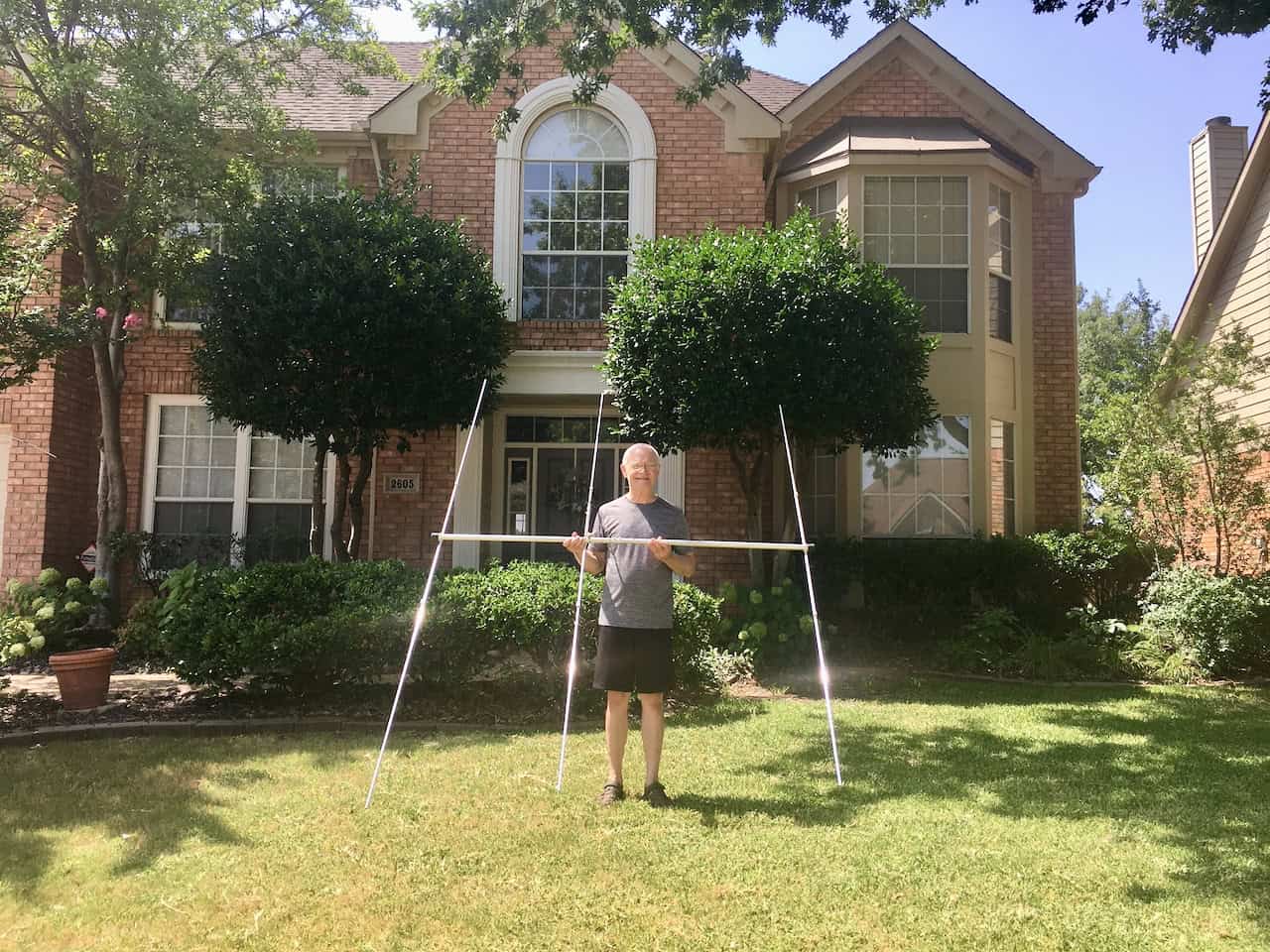
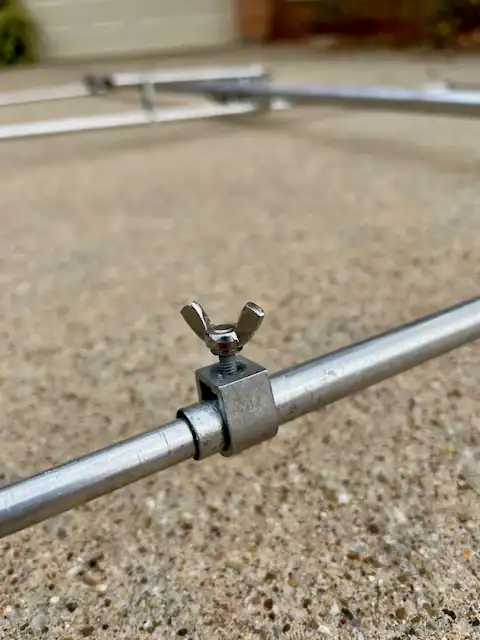
ting it up involves sliding the elements onto the antenna. I’ve actually added wing screws to make that process a little quicker.
Many other three-element Yagis are available, with similar performance traits. The key factors are weight and ease of assembly in the field, both of which enhance portability.
For a rare six-meter grid rove to DM86/DM85, I brought a 5-element Yagi. It performed well but was difficult to transport and set up.
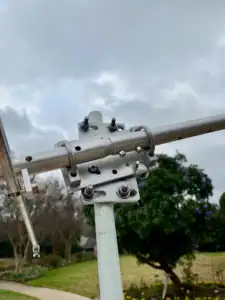
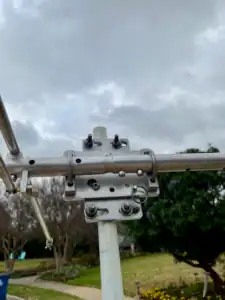
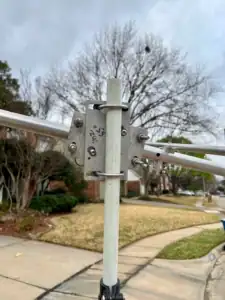
One final suggestion is to consider the Rover/Portable Quick Release Boom-to-Mast Plate sold by Directive Systems. You can locate it by scrolling down their homepage. It allows you to attach the boom to the mast with a quick twist and click, and to remove it the same way. See the photo gallery below.
Make it Happen
Don’t get caught up in analysis paralysis. Do what you can and get on the air. Then make changes as you learn what works best for your operation.
Good luck and have fun.